How Much Does Whole-House Generator Installation Cost in Philadelphia? (2026)
The short answer: there’s no single price for a whole-house generator, because no two installations are the same. The cost is set by five things: the size of generator your home needs, whether it runs on natural gas or propane, how far it sits from your electrical panel and gas supply, the transfer switch and panel work involved, and your township’s permit and inspection requirements. An essential-circuit system is the most affordable option; a whole-home automatic generator costs more but powers everything. This guide walks through each factor so you understand your quote before anyone comes out.
When you’re ready for a real number, Wescott Electrical’s generator installation team will run a load assessment and give you a clear written quote, free.
What’s Included in the Cost of a Whole-House Generator Installation
A standby generator installation is really several jobs in one. A complete quote should cover:
- The generator, sized to the circuits you want backed up
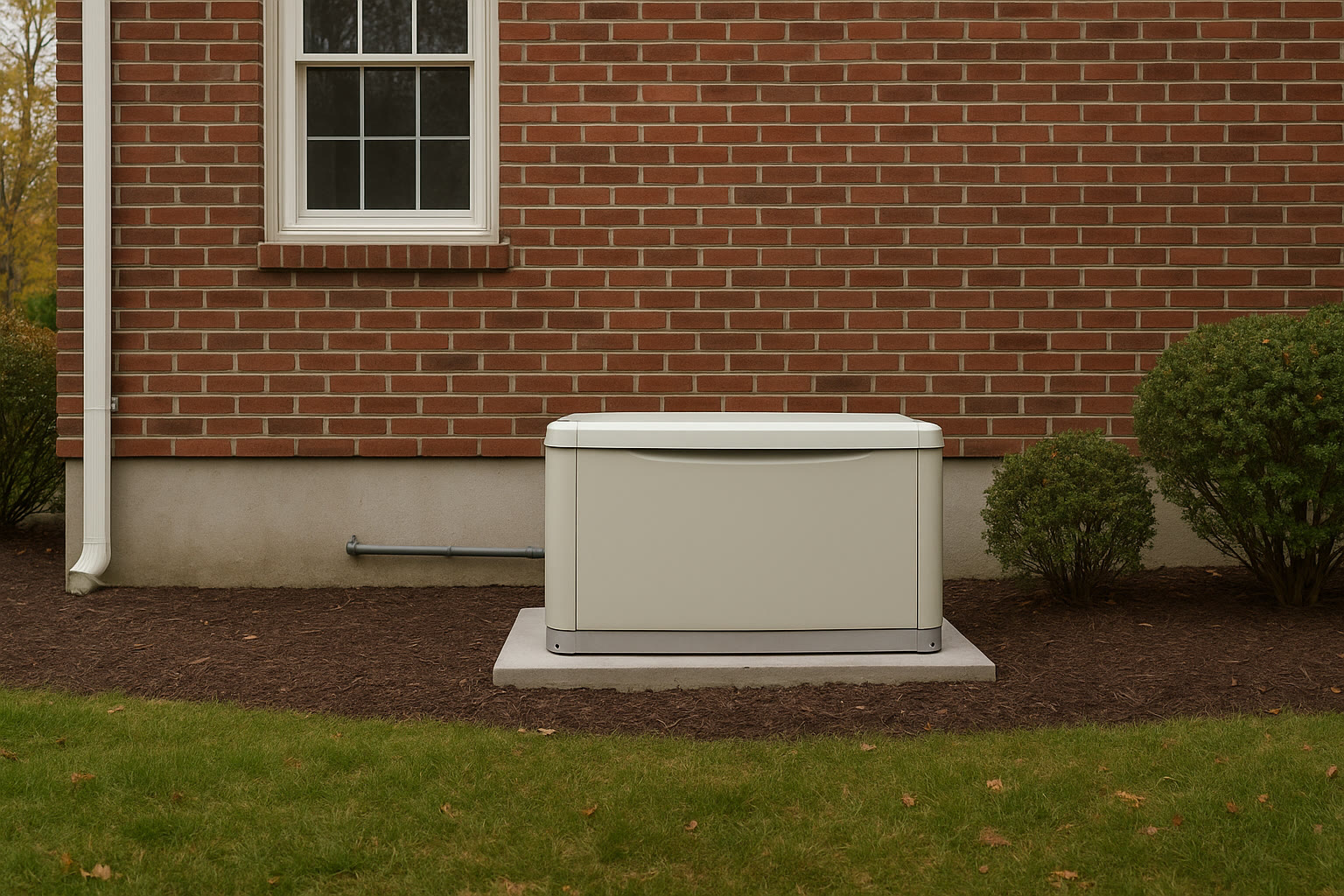
- A generator pad for the unit to sit on outside your home
- An automatic transfer switch wired into your electrical panel
- The fuel connection to your natural gas line or a propane tank
- Permits, inspection and utility coordination
- Start-up and testing of the automatic changeover
We don’t publish a price list, because quoting a generator sight-unseen does homeowners a disservice: the honest answer depends on your home, your panel and your property. What we can tell you is what pushes the price up or down.
| Cost factor | Keeps the cost lower | Pushes the cost higher |
|---|---|---|
| How much you back up | Essential circuits only | The whole home, including central air |
| Generator type | Air-cooled unit | Liquid-cooled unit for large, heavy loads |
| Fuel | Existing natural gas line | Propane tank needed |
| Location | Close to the panel and gas meter | Long wiring and gas runs across the property |
| Electrical panel | Modern panel with room to spare | Older, full or undersized panel that needs work |
| Permits and inspection | Required on every standby installation | |
What Drives Generator Installation Cost
Two homes on the same street can get very different quotes. These are the factors that make the biggest difference.
Generator size and how much of the house you want to power
Size, measured in kilowatts (kW), is the biggest single cost driver. A unit that covers essential circuits (lights, refrigerator, furnace blower, sump pump and a few outlets) costs less than one that runs the whole house, including central air. Many Philadelphia-area homes land in the air-cooled 14 kW to 26 kW range. Our guide to what size whole-house generator you need walks through the sizing math, and a proper load calculation settles it. We won’t upsell you a bigger unit than your home needs.
Air-cooled vs liquid-cooled
Air-cooled standby generators cover most homes and are the more affordable tier. Liquid-cooled units are built for larger homes with heavy, sustained loads, and they cost considerably more. If your load calculation points past the air-cooled range, the generator itself becomes the biggest part of the quote.
Natural gas or propane
If your home already has a natural gas line, that’s usually the simplest choice, because there’s no tank to buy or refill. Where gas isn’t available, propane is a strong option, but the tank and fuel deliveries add to the cost.
Distance from your panel and gas meter
The farther the generator sits from your electrical panel and gas supply, the more wire, conduit and gas pipe the job needs. A short, straight run beside the house keeps costs down; a long run across a yard or around a driveway pushes them up. Placement also has to respect safe clearances from windows and doors, which can decide where the unit goes.
Transfer switch and panel capacity
An automatic transfer switch disconnects your home from the grid and switches to the generator on its own when the power drops, so the generator can never back-feed the utility line. If your electrical panel is older, full or undersized, it may need work before a generator can tie in. Our electrical panel upgrade cost guide explains what that involves.
Permits, inspection and utility coordination
Standby generators in Montgomery County need an electrical permit and often a gas and inspection sign-off from your township, and the installation has to be coordinated with PECO. It’s not optional, and a licensed electrician should handle it as part of the job.
Generac and Other Whole-Home Standby Generators
Generac is the best-known name in home standby generators, and Kohler is another common choice. Both offer air-cooled models for most homes and liquid-cooled models for larger ones, and both run on natural gas or propane and start automatically within seconds of an outage. When it comes to what a Generac costs installed, the same rule applies as for any brand: the installed price follows the size you need and the work at your property. The right unit comes from your load calculation, not the other way around.
What about a portable generator? A portable generator costs less up front, but you have to be home to start it, run it safely outside, refuel it during the storm and move loads over by hand. A standby generator does all of that automatically, even when you’re away.
Is a Whole-House Generator Worth It in the Philadelphia Area?
For a lot of homes around Jenkintown, Abington and the rest of Montgomery and Bucks Counties, the answer comes down to what an outage actually costs you. A standby generator tends to earn its keep if:
- Storms regularly knock your power out for hours at a time
- You rely on a sump pump to keep the basement dry, or a well for water
- Someone in the house depends on powered medical equipment
- You work from home, or can’t afford to lose a full freezer
Beyond the installation, budget for fuel while it runs during outages and for regular maintenance, including inspections and oil and filter changes, which keeps the generator ready to start when a storm hits.
If a storm has already caused damage, such as exposed wiring, a burning smell or power to only part of the house, don’t wait for a generator quote: call our emergency electrician service first.
Generator Installation Cost FAQ
How much does it cost to install a whole-house generator?
It depends on the generator size, your fuel source and how far the unit sits from the panel and gas line. Essential-circuit systems are the most affordable; whole-home automatic units cost more but power everything. We give you an exact written quote after a quick load assessment.
What’s included in a generator installation quote?
A complete quote should cover the generator, the pad, the automatic transfer switch, the gas line or propane connection, the wiring, permits and inspection, and start-up testing. Ask any installer to confirm each of these is included so there are no surprises.
Is natural gas or propane better for a standby generator?
If your home already has a natural gas line, that’s usually the simplest choice because there’s no tank to refill. Propane is a strong option where gas isn’t available. We’ll recommend the best fit during the assessment.
How long does generator installation take?
Most residential installs are completed in one to two days on site once permits are in place. We’ll give you the full timeline with your quote.
Do I need a permit for a standby generator in Montgomery County?
Yes. Standby generators require an electrical permit and often a gas and inspection sign-off from your township. Wescott Electrical handles the permitting and inspection as part of every installation.
Will I need a panel upgrade to add a generator?
Not always. If your panel is older, full or undersized, it may need an upgrade so the generator and transfer switch can tie in safely. We check your panel during the load assessment and tell you straight whether it’s needed.
Get an Exact Generator Installation Quote
Wescott Electrical is a licensed, insured electrician based in Jenkintown. We’ll assess your panel and the circuits you want backed up, recommend the right-sized generator, handle the township permits and gas hookup coordination, and give you a clear written quote before any work starts.